



The deserts of the UAE are filled with life and the potential for a green agricultural future. Youth Agriculture Ambassador and founder Qadreya Al Awadhi lays out her vision for a sustainable food ecosystem that ensures food security in arid environments.
There is a quiet, overlooked resilience in the soil of the United Arab Emirates. When most people look at our landscape, they see the arid beauty of the desert. But having grown up around my family’s farm here in Dubai, I learned early on that this land has plenty of life to give—if you know how to work with it.
For decades, we have heavily relied on global supply chains to feed our population. This disconnect became glaringly obvious to me a few years ago when I started paying close attention to what we were feeding our youngest generation. I walked down supermarket aisles looking at baby food jars that had traveled thousands of miles across oceans just to reach a shelf in Dubai. They were heavily processed, packed with preservatives to survive the journey, and completely detached from the local environment. In fact, most of the baby food in the supermarket is older than the baby you feed!
None of this made sense to me; I knew something had to change.

This is what motivated me to start Bumblebee (Food). The entire premise was built on drastically reducing food miles and championing Emirati agriculture by utilizing our signature farm-to-freezer method.
From day one, the goal was to create meals that were as close to the earth as possible. Instead of importing mass-produced purees, we turned to our local Emirati farmers. We start by sourcing fresh, nutrient-dense produce straight from UAE farms and locking in that nutrition using snap-freezing techniques. Our recipes are designed to reflect natural, wholesome eating, utilizing high-quality ingredients and naturally sweetening our meals with local dates and honey.
But building a sustainable food system means looking at the entire lifecycle of what you produce. We transformed our operations into a zero-waste kitchen. Every part of the plant—stems, skins, leaves, and roots—is utilized in our process, and any excess food from the kitchen goes directly to feed chickens and other livestock on our farm. Furthermore, our meals are delivered to parents in 100% biodegradable, reusable, and recyclable packaging. It requires a bit more effort and a lot more planning, but it proves that an entirely circular, locally sourced food business isn’t just a nice idea on paper; it is entirely achievable here in the UAE.
This hands-on work—spending time on my family farm, negotiating with local farmers, and reverse-engineering our supply chain to be as green as possible—eventually led to one of my proudest milestones: being appointed as a Youth Agriculture Ambassador (سفراء الزراعة) by the Federal Youth Authority and the Ministry of Climate Change and Environment.
If we want to truly revolutionize our food security, we must encourage small local farmers to grow and actively provide the solution for them, because not everybody has the resources to go full tech or to spend millions on infrastructure. Solving this piece of the puzzle changes everything.
Qadreya Al AwadhiStepping into this role has given me a wider lens through which to view our national food systems. Far from the outdated assumption that arid climates cannot support agriculture, the UAE government is actively transforming the landscape with robust green initiatives. Programs like the Sustainable Product drive, which aims to secure a 25% share of local agricultural products in the hospitality sector, alongside the Dubai Farms programme offering subsidized farming supplies to local farmers, show a massive commitment to domestic agriculture.
Furthermore, substantial government backing—such as the targeted $272 million industrial resilience fund- proves that the nation is aggressively and successfully supporting local food production.
However, there is still some work to be done. From where I sit, both as a food founder and as someone with a financial background, the biggest challenge facing sustainable agriculture today is the economic cost of scaling climate-resilient AgTech.
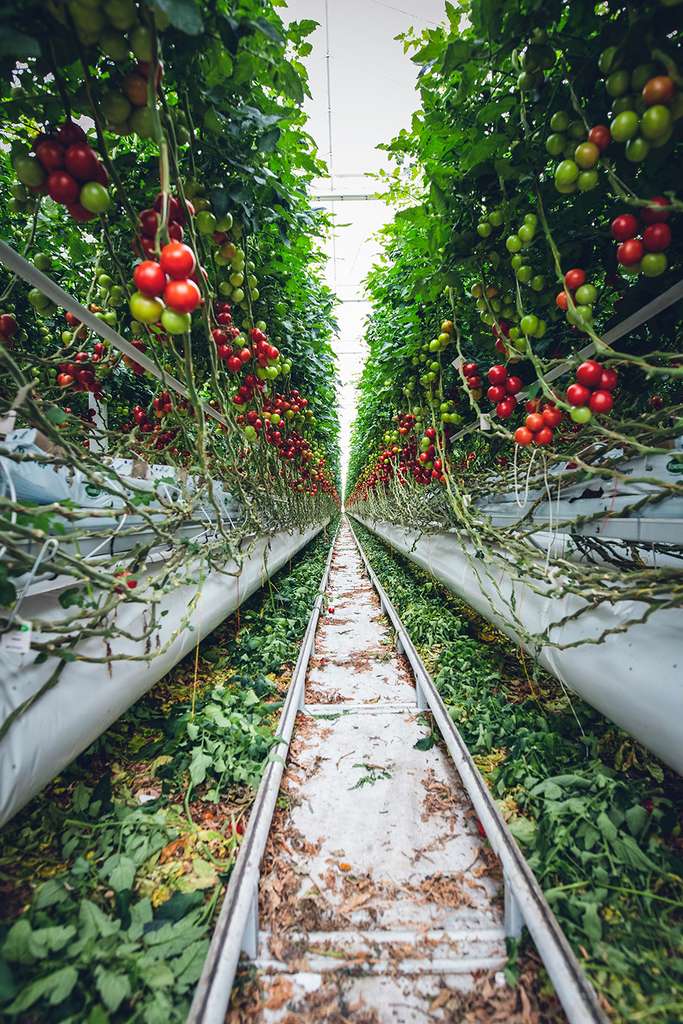
We are seeing incredible advancements in vertical farming, which I am actively exploring for my own family farm. These technologies use a fraction of the water traditional agriculture requires and allow us to grow crops year-round. But these systems are incredibly energy-intensive to run and expensive to build. If we want to truly revolutionize our food security, we must encourage small local farmers to grow and actively provide the solution for them, because not everybody has the resources to go full tech or to spend millions on infrastructure. Solving this piece of the puzzle changes everything.
As climate change increasingly disrupts global supply chains, causing unpredictable crop yields (such as the anticipated El Niño) and international shipping delays, the nations that thrive will be those that empower their local growers. The UAE is already leading this charge, proving that scaling accessible, low-energy local farming insulates a nation from global food shocks and writes the blueprint for arid climates worldwide.
Food security isn’t just an abstract policy issue. It’s what is sitting on our children’s plates every single day. By investing in our local soil, empowering our farmers, and normalizing zero-waste, locally sourced meals, we are doing more than just feeding a generation. We are helping our kids build a healthy and sustainable relationship with food.
