

On October 1, 2026, the Clean Energy Business Council hosted its annual summit, offering a unique perspective into the MENA region’s sustainable future. From transformative technology to new collaborative pathways, the summit tackled crucial issues of the green transition.
“I’ve always had a passion for trying to protect our environment because it’s taught to us in our faith and government messaging. When I think about future generations, it’s important they enter a world that isn’t scary for them.”
Those are the words of Omar Al Busaidy, UAE and Oman President of Future Pipe Industries (Platinum sponsors for the event). Omar’s enthusiasm for sustainability and protecting our planet is apparent throughout our interview and his keynote address at the 14th Annual Clean Energy Business Council MENA (CEBC) Summit on October 1, 2026.
This year’s theme? The Turning Point: Change, Resilience, and Economic Transformation within the MENA region, underscoring the need to convert current disruptions into sustainable action. And just like Omar Al Busaidy’s unwavering optimism, the summit focused on the incredible climate tech and positive solutions coming to life in the MENA region.
CEBC Managing Director Adrienne Doolan brought her personal passion for sustainability to the event. Leading by example, the summit was fully carbon-neutral. Paper badges and plastic lanyards were swapped for digital QR codes, while sponsor block displays were crafted from sustainable mycelium by MycoSphere. Behind the scenes, sponsor Farnek tracked emissions of attendees to offset them in the future. Additional sponsors for the day included Emirates NBD, Hitachi Energy, Envoa by Veolia, LeasePlan, Yellow Door Energy, and Positive Zero.
“Climate change knows no borders, so we really need to work together,” Adrienne Doolan says. “Our job at the CEBC is to convene meetings between private sectors and governments to ensure that policies actually get adopted and enforced.”
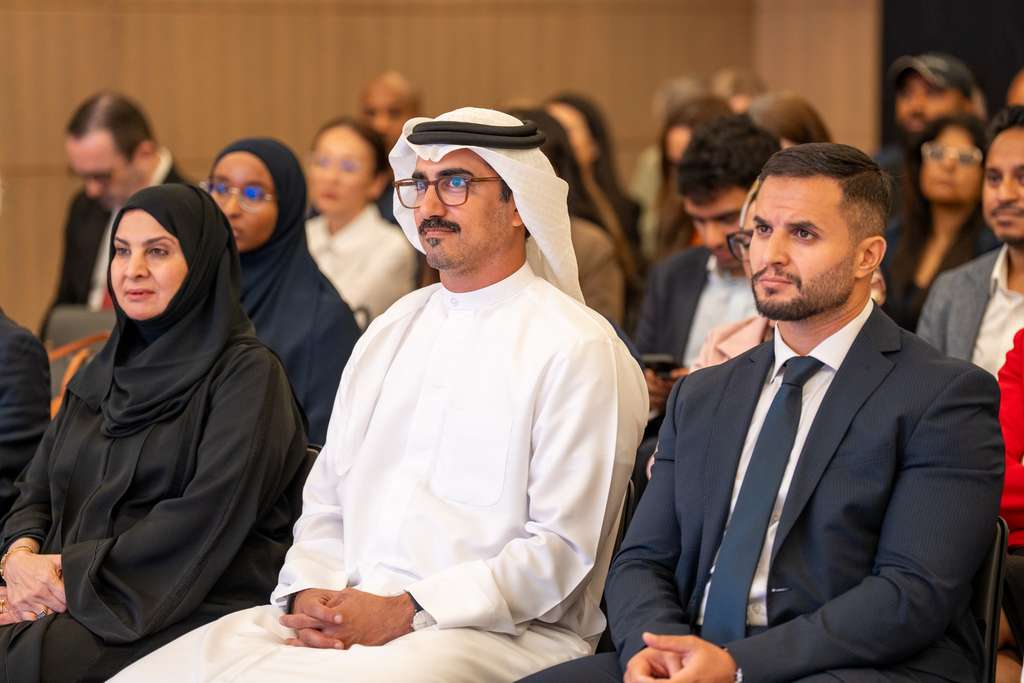
In his welcome remarks, Dr. Nasser Saidi, Chairman of CEBC MENA, gave a candid reality check on the region’s climate exposures. Without shying away from the current tensions and uncertainty, Dr. Saidi was frank about the challenges facing the region: climate change, geopolitical risks, and the need for an energy transition and sustainable technologies.
Climate change is already occurring; the focus must shift from mitigation to adaptation, especially in vulnerable regions.
In her keynote address, H.E. Lucy Berger, EU Ambassador to the UAE, articulated a vision for a stronger, more resilient partnership between Europe and the Gulf. Highlighting shared energy security challenges, she called for interconnected clean energy networks. The EU and the Gulf’s strategic partnership leans on flagship initiatives like the Trans-Mediterranean Energy and Cleantech Cooperation (TMAD), which would support investment and immense renewable capacity.
A major highlight of the summit was the signing of a Memorandum of Understanding (MoU) between the Morocco Energy Leaders and the CEBC. Building on strong investment ties—with the UAE becoming Morocco’s top foreign investor in 2025—the partnership will create joint networking platforms and policy workshops to help Morocco reach its goal of 52% renewable energy by 2030.
“We are excited about this partnership to enhance collaboration, organize events, boost business platforms, and drive policy dialogue so we can go far beyond where we are today,” said Mr. Nabil Jedaira, President of Morocco Energy Leaders.

Throughout the summit, panelists challenged traditional views on sustainability, asserting that energy and water infrastructure have evolved into direct national security priorities. With Gulf nations depending on desalination for up to 95% of their drinking water, utility-scale solar paired with battery storage is no longer just an eco-friendly option—it is the fastest, cheapest path to securing water and energy security.
Beyond funding, though, speakers brought everything back to the younger generations. Climate literacy starts in the home. Nurturing sustainability at a young age means not just integrating environmental education into curricula; it means helping young people get their hands dirty and experience real-world sustainable action. A theme that extended from education back into industry.
The world of climate tech is filled with wonderful ideas and innovative solutions (one panelist spoke about atmosphere-to-water transformers, for example); however, how do those technologies translate into the day-to-day life of consumers? How can new technologies integrate into older infrastructures? And how can leaders ensure these solutions actually make it into factories and homes?
H.E. Sheikh Dr. Majid Sultan Al Qassimi, CEO and Founder of Soma Mater, offered his practical and effective solution to the audience: he often puts new technologies directly into his home, stress-testing them against the lived realities of modern life.
The energy transition will be won or lost on finance. The resources, technologies and ambition already exist. What is missing is the ability to move capital at scale to where the sun, wind and land are, at a cost of capital that makes projects bankable.
Dr. Nasser SaidiAcross the panels, speakers consistently kept Net-Zero targets at the top of future planning; decarbonization and competitiveness are not mutually exclusive. Reducing water consumption and enhanced energy efficiency are not only possible for manufacturers, they said, but in many cases have already been incorporated throughout the region with great success.
Omar Al Busaidi brought his energy back to the podium in an afternoon keynote. With the MENA region investing over $22 billion in renewables and adding 13 GW of clean capacity last year, Al Busaidi pointed out that engineering decisions must look beyond low upfront costs. Retire the “Copy-Paste” approach to infrastructure, he said. Pasting a 15-year-old spec into today’s harsh environment (high heat, salinity, water stress) doesn’t manage risk; it just postpones future headaches.
Instead, he suggested, ask what the system must endure over 40 years in harsh conditions and ensure that standards are dynamic tools using advanced materials, not static “museum pieces.”
“The energy transition will be won or lost on finance,” Dr. Nasser Saidi said, reflecting on the day’s impact. “The resources, technologies and ambition already exist. What is missing is the ability to move capital at scale to where the sun, wind and land are, at a cost of capital that makes projects bankable. Africa receives only a small fraction of global clean energy investment despite having some of the world’s best renewable resources.”
“Closing that gap is exactly why the Clean Energy Business Council exists.”
