


Sustainability seems to be everywhere these days, but have you thought about how it’s making its way into your cup? Turns out UAE bartenders are already ahead of the game at the 3rd Annual Sustainable Bartending Competition.
“Every cocktail should have a story,” says Benjamin Gomes, bartender at InterContinental Residences Abu Dhabi, and winner of the 3rd Annual Sustainable Bartending Competition.
For the past three years, bartenders from across the UAE have come together at the Media One Hotel in Dubai to learn sustainable bartending techniques, expand their skills and, of course, take home the winner’s prize. This year, twelve of the nation’s most creative mixologists competed, showcasing their most innovative, zero-waste creations. Competitors threw their shakers, strained their concoctions, and served everything up to five expert judges (in perfectly chilled glasses).
The task: develop two delicious drinks (one mocktail and one cocktail) incorporating local ingredients and low-waste practices, and present them with a great story. MMI supplied cocktail ingredients, while the mocktails utilized products from Lyre’s Spirit Co. MEA. 30 applicants submitted potential recipes in the first round, and 12 finalists were invited to demonstrate their skills on September 29th, 2026. Contestants came with boxes of unique ingredients, many made especially for the day: camel milk foam, coffee-ground shrubs, lemon-peel foam, saffron water. Others brought locally-sourced elements, such as ghaf tree honey or homegrown dates.
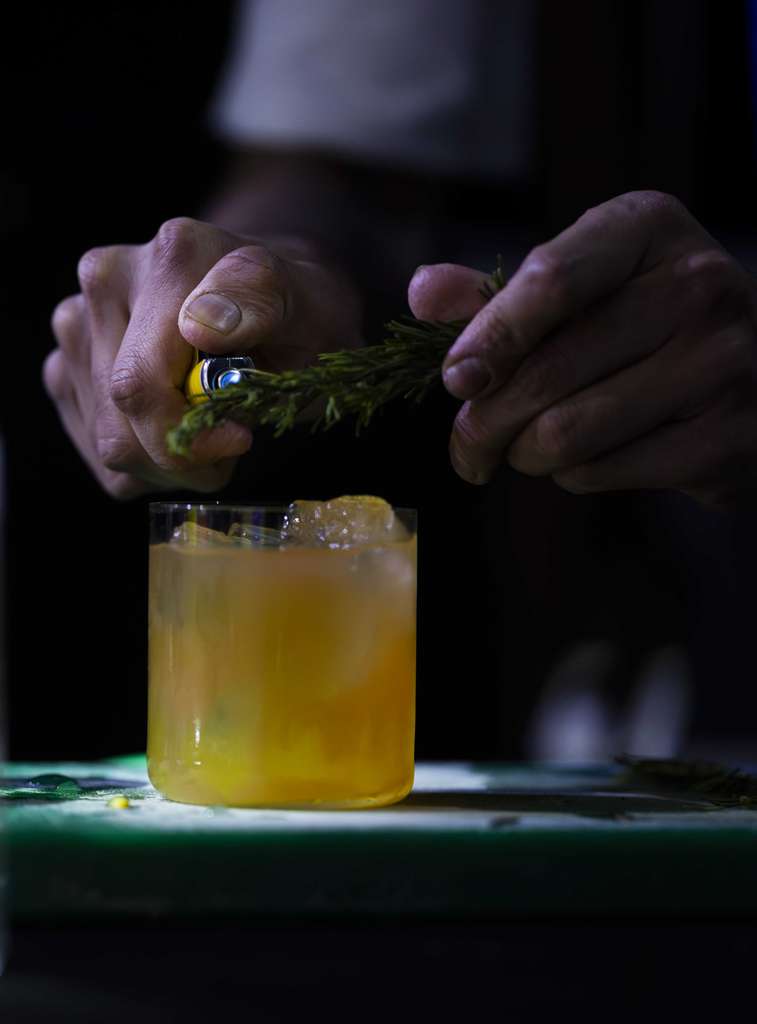

For each contestant, the event was an invitation not only to explore the boundaries of mixology, but to find new ways of incorporating sustainability into the hospitality industry. Many of the finalists took inspiration from food waste produced in their own hotel kitchens, putting into practice this year’s competition theme of ‘Homegrown and Locally-Sourced ‘.
“You can mix anything and give it to a guest, but it’s not what they’re sipping; it’s also the story you’re bringing to them,” Gomes explains, drawing on his experience working with patrons. The story of each cocktail, its inspiration, the development of each ingredient, and the drink’s connection to the bartender’s hotel were crucial aspects of the competition. For Gomes, sustainability is already a part of his work; at his bar, they serve drinks on coasters made from date seeds and use straws made from food waste.
Gomes shared this with his fellow contestants after the competition, highlighting the event’s larger purpose – to expand awareness of sustainable practices and encourage it across the hospitality industry.
And what does it take to make a sustainable cocktail and mocktail that not only tastes great and looks beautiful, but also surprises the judges?
Contestants were judged across eight categories: presentation, aroma, taste, creativity, technique, use of ingredients, sustainability, and last but not least, storytelling. During each round, contestants mixed both drinks in front of the judges, using no more than five ingredients, with only three minutes to prepare their workspace and seven minutes to create. Each drink was then presented to the panel of judges, though often, they requested an extra sip of a particular ingredient on its own to fully grasp the flavors or better understand its eco-friendly design.
The judges represented a mix of expertise across hospitality, food and beverage, and sustainability, featuring Tiffany McGrath, Director of Sustainable Hospitality at Sustainability Kiosk, Jan Dubsky, Business Development Manager of Chefs’ Hub, Chris Olivier, Co-Founder of Graft Collab, Peter Avram, Founder of AVANI Middle East, Sudera Fernando, Business Development Manager for Lyre’s Spirit Co. MEA, and, as event host, MC Jono from Dubai 92.
The event encouraged participants to think differently about beverage creation and waste management, not only in their own bars, but also in how they engage with guests.
“We’re a community-driven hotel, and a community-driven restaurant. So whatever comes from the community, we try to give back,” says Krispus Kisku, third-place winner, speaking about his experience at Studio One Hotel and the connection he feels with guest patrons. “And from the simplest things, such as buying our ingredients, we take them from local markets instead of buying it from abroad so that we can give back to the community.” Kisku feels that Dubai is ready to embrace sustainability in its hospitality scene, with the eco-friendly and zero-waste labels gaining traction in bars across the city.
Every cocktail has a story. You can mix anything and give it to a guest, but it’s not what they’re sipping; it’s also the story you’re bringing to them.
Benjamin GomesBeyond the push from bartenders toward sustainability, the winners all agreed: patrons are also more excited about cocktails that feel better for the planet. “A lot of people are interested when you talk about sustainability and cocktails,” explains Vidit Ghaire from the W Dubai Mina Seyahi. “If a guest comes to me and asks, ‘ What is in it? And I tell him that there is the citrus itself, which instead of being wasted has been changed into the foam on top, he will be more interested in having that drink. I also feel I’m doing something greater for the world that way.”
For the participants, this competition not only broadened their mindsets and exposed them to new skills and techniques, but it also pushed the boundaries of sustainable mixology. As supply chains shift and consumer tastes change, Dubai’s hotels are adapting alongside.
However, the competition covered more than just the finalists; this year also added a mystery box cocktail contest (facilitated by Rudi de Vos, Bacardi Ambassador), where 12 additional competitors were divided into three groups to create a sustainable cocktail in only seven minutes. As the teams worked together, each group was asked to carefully consider every aspect of the drink: how could they reduce waste (use all parts of a lemon or herb, for example) or how would they build a balanced flavor profile in such a short amount of time? Relying on their years of experience, contestants worked together to produce a bit of magic in just a few short minutes.
In the end, 24 participants representing 19 different hotels from across the UAE took part in the day’s event, bringing together a whole new cohort of sustainability champions in the hospitality sector. Afterward, all competitors were treated to a tequila masterclass from Patron, taking them through sustainable harvesting and brewing techniques.
Yet, there can be only one winner. The top three finalists took home prizes of new equipment, education opportunities, and for the winner, a WSET bartending course; all proving that great drinks and sustainability can absolutely be a tasty combination.
And for all the winners, being a better bartender also means committing to more eco-friendly options. “To move forward with sustainability, you have to somehow take out time to be a better human for the world,” says Gomes.
And let’s be honest, embracing sustainability in a delicious cocktail (or mocktail) is no hardship.
What’s in your glass?
Winner: Benjamin Gomes (InterContinental Residences Abu Dhabi)
Cocktail: “The Desert Oasis”
Mocktail: “The Lucent Garden” (a clear, translucent, garden-themed drink)
Concept: Infusion of local flavors and innovative waste reduction.
Ingredients: Dates and saffron water (inspired by the pancakes cooked each morning in the hotel kitchens), gin, cucumber, lemon juice.
Second Place: Vidit Ghaire (W Dubai – Mina Seyahi)
Cocktail: “Rooted”
Mocktail: “Rooted” (gin replaced with a Lyre’s non-alcoholic gin)
Concept: Local ingredients and upcycling common bar waste.
Ingredients: Honey derived from the Ghaf tree flower (UAE’s national tree), and a foam made from leftover lemon and lime peels.
Third Place: Krispus Kisku (Studio One Hotel)
Cocktail: “The Circle of Crema”
Concept: Spent coffee grounds became a shrub, aiming for zero waste from one of the most common hotel byproducts.
Ingredients: Coffee-ground shrub, fresh orange juice, syrup, vodka.
Inspiration: An “espresso martini” style drink, highlighting Arabica coffee’s origins in the Arab peninsula.
