


More than three-quarters of Earth’s land has become permanently drier in recent decades, creating what the UN terms an ‘existential crisis’ driven by the insidious rise of aridity. These changes threaten to degrade 90% of our planet’s land by 2050. But for the African Union Development Agency, solutions haven’t disappeared.
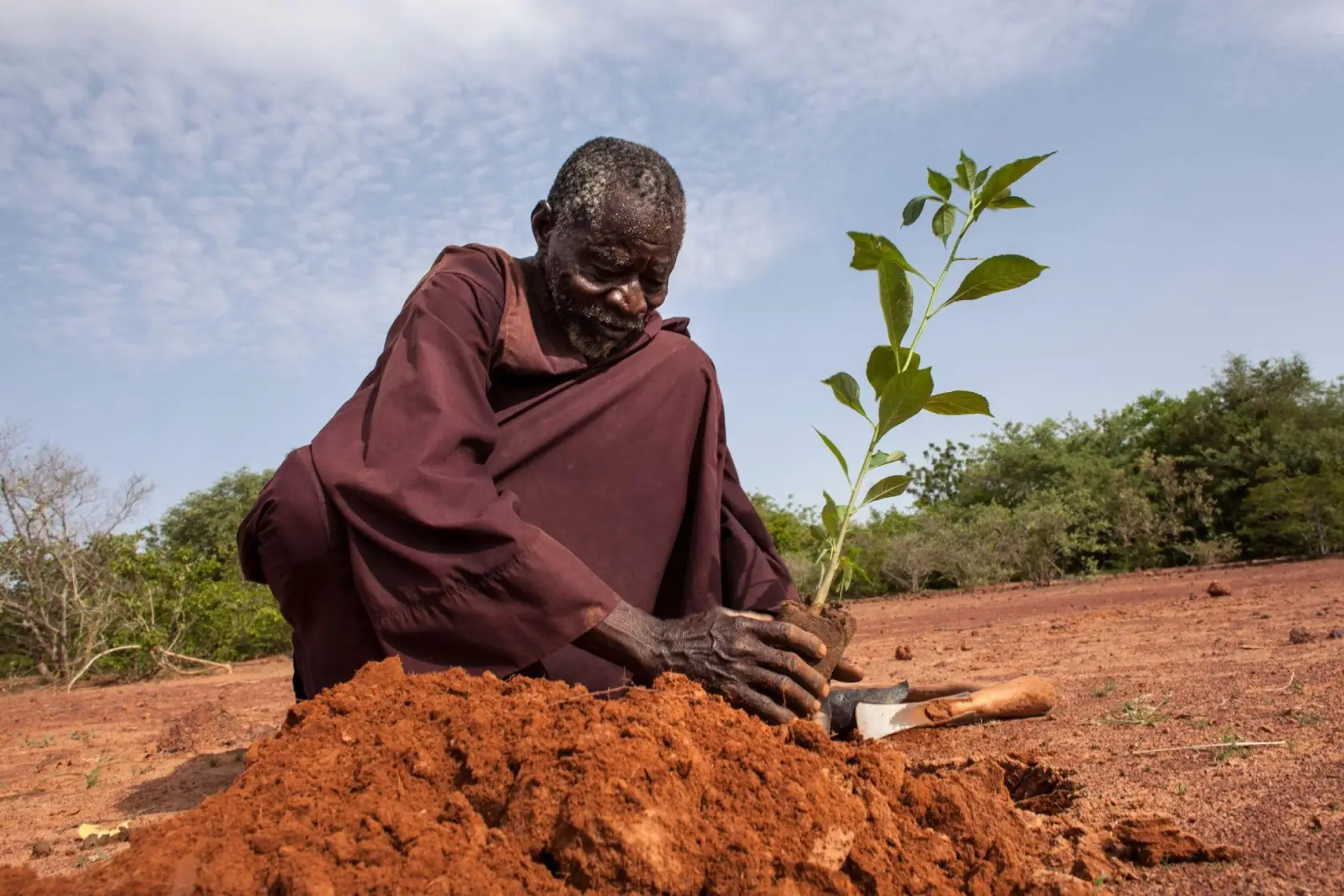
Yacouba Sawadogo was known as ‘The Man Who Stopped the Desert.’
Back in the 70s, when climate change was still a fringe topic, one man saw the effects of desertification and stepped up to fix it. Born in Burkina Faso, Yacouba used traditional farming methods, such as zaï, to become a pioneer of agroforestry.
And as some global landscapes lose their ability to sustain life, Yacouba’s techniques are still pushing back the desert.
We spoke to Benjamin Akobundu, Programme Officer of Forest Landscape Restoration at the African Union Development Agency (AFR100), about this problem and how it’s impacting countries across East Africa. Like so many issues within climate change, the problem is simple: fertile land is transforming.
As the landscape loses vegetation and the soil’s vibrant universe of trillions of microorganisms, root systems, and fungal networks becomes degraded, what follows is a story of tremendous loss.
But one not without hope.
Human Cost, Human Hope
The Sahara Desert stretches across the African continent. A swathe of desert encompassing over 9,200,000 square kilometers, from Mauritania to Sudan, the Sahara is one of the world’s largest dry areas.
And it’s getting bigger.
From 1920 to 2013, the Sahara grew by over 10%, an amount roughly equal to the country of Tanzania. How is this affecting the people who call these areas home? The price of water is up by 2000%. Acres of failed crops on parched farmlands. Millions of cattle, sheep, goats, chickens, and other farm animals die of thirst, and amidst this severe drought, over 26 million people are facing starvation in Ethiopia, Somalia, and Kenya.
In China, more than a quarter of its land area – a staggering 2.6 million square kilometres – is afflicted by desertification. In India, that number hits 30%.
Can it be stopped, though?
From China to Brazil, Australia to the African continent, dusty patches of infertile land are wreaking havoc. Got a spot of land to farm? Difficult when the soil no longer holds water. Need to feed some livestock? Impossible when lakes have dried up and gone.
AFR100 is a country-led effort to bring 100 million hectares of land in Africa into restoration by 2030. Launched in 2015, the initiative comprises over twenty countries, all working together to change the future of Africa’s landscape.
For AFR100, stopping the desert’s expansion is a method of survival that literally turns back the sands and ensures food security is a reality. “How do we plan restoration activity with agriculture? This tree can take years to grow. So how is the farmer able to sustain themselves within that period? We combine restoration with agriculture,” Akobundu explains.
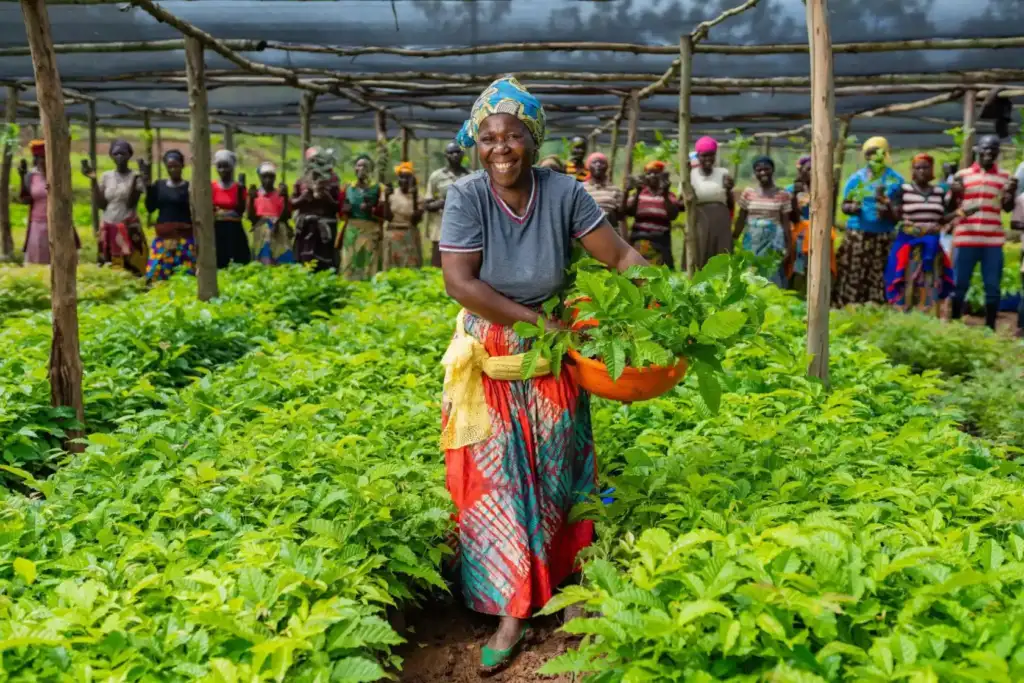
They distribute grants, educate community members, and coordinate large-scale restoration efforts with governments and locals. “Part of what we do there is to ensure that the women and youth have been given priorities to bring them into restoration activity,” Akobundu adds, describing one of their many programs designed to encourage community participation and rehabilitate degraded lands.
The Rising Scourge of Parched Lands
Here’s where we’re going to introduce some science, but stick with us; It’ll all make sense.
Drylands have an aridity index less than 0.65, which means that the annual rainfall is only 65% of what the sun and wind could evaporate. However, this doesn’t mean they’re empty spaces; drylands are also home to 27% of global forest area and 41% of the world’s agricultural land. Land degradation in drylands – desertification – is now a growing threat across the world, affecting 213 million people.
As the landscape loses vegetation and the soil’s vibrant universe of trillions of microorganisms and fungal networks becomes degraded, what follows is a story of tremendous loss.
Nearly 60% of all species on our planet live in soil.
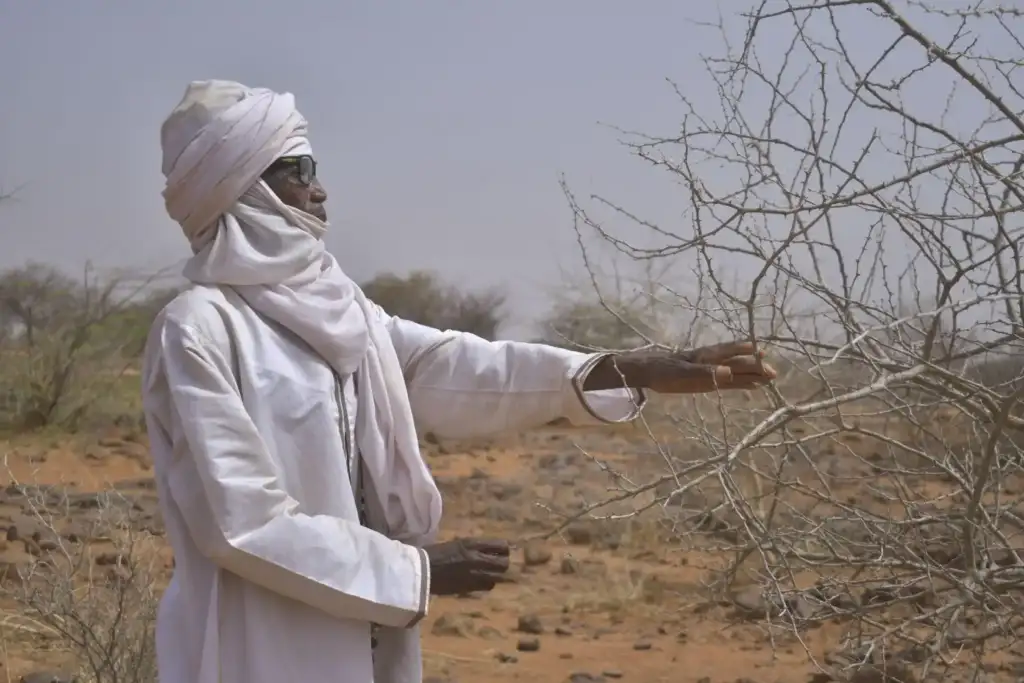
“In the Niger Republic, the main occupation is animal rearing, which focuses on grazing. Overgrazing exposes the soil nutrients to heat and climate change, thereby leading to desertification,” says Akobundu.
Akobundu explains that desertification takes place in Burkina Faso, the Niger Republic, Chad, Northern Cameroon, and Northern Nigeria, just to name a few. He adds, “The forests are being deforested for economic gains, or also for wood to energy, as the majority of the population focuses on traditional methods of cooking.”
Another crucial factor is water stress and unsustainable water management. Akobundu says, “There are studies about the Chad basin that found that the basin is shrinking because of the rising temperatures, reducing the water volume and also the availability. Water there is being depleted because it’s being used for livestock and irrigation.”
Lake Chad, historically the 11th largest lake in the world, has lost 90 percent of its surface area between 1963 and 1990.
The danger is that parched lands activate colossal feedback loops feeding a vicious cycle of degradation.
In 2026, after yet another failed rainy season, over 26 million people are currently facing “extreme hunger” due to severe drought in Ethiopia, Somalia, and Kenya. The cost of water has shot up by more than 2000% in parts of Somalia, crops have failed, and livestock are dying from dwindling pasture and water, causing widespread food and water insecurity.
In China, the impacts of desertification include all of the above, as well as airborne pollution from sandstorms and dust, and even physical damage to railways, buildings, roads, and pipelines.
The Great Green Wall
Nevertheless, desertification can be reversed.
Akobundu says, “We call it the Great Green Wall, starting from the northern part of Senegal all the way to East Africa, Djibouti.”
The Great Green Wall initiative in Africa, launched in 2007, aims to restore degraded landscapes to green, fertile, and healthy land across 8,000 km and 11 countries of the Sahel region – spanning from the West to the East coast of the continent.
The AFR100, the African Forest Landscape Restoration Initiative, is an effort to restore 100 million hectares of degraded land by 2030 through agroforestry, reforestation, and assisted natural regeneration.
Part of the challenge, Akubundu explains, is convincing youth, as well as governments, to commit to restoration activities. “How do we bring restoration activity to the centre of national and regional development?” he says. “How do you convince the youth to go into restoration, when the perception is that a farmer is poor?
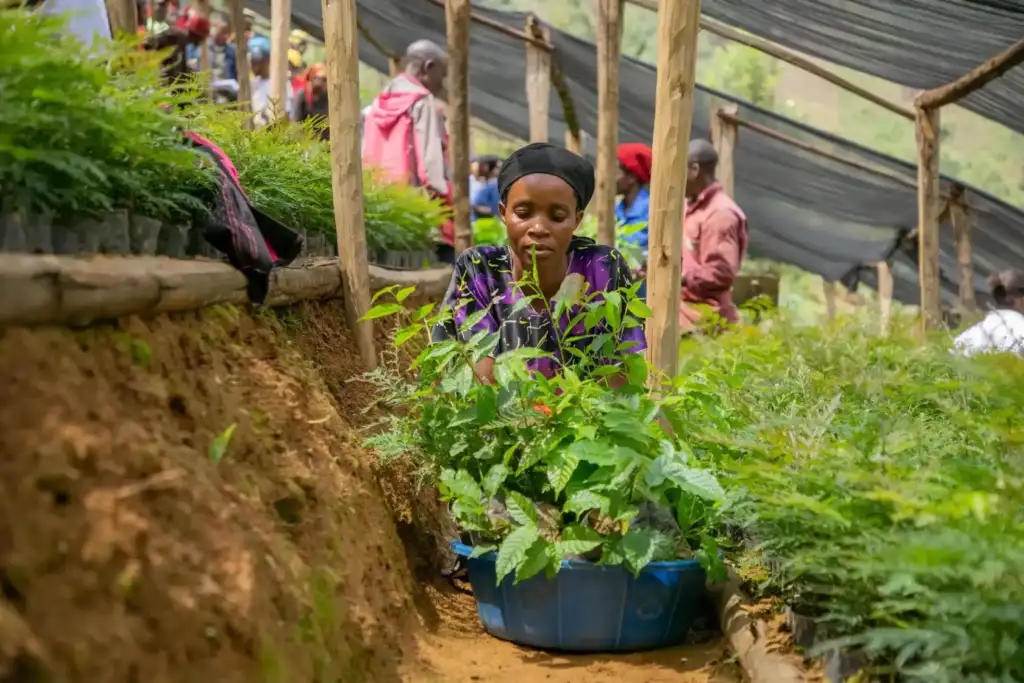
They recently launched the Land Accelerator program, which empowers youth with comprehensive entrepreneurship training and provides seed funding to go into restoration. “Some of them establish nursery companies. Some establish restoration companies. Some also establish processing companies, whereby some of the products can be exported.”
The program has enabled 450 entrepreneurs from 51 countries, creating 11,500+ jobs and restoring 30 million trees. He reminisces, “For instance, the nursery we visited in Zambia, it has about 150 staff, and each is well-paid.”
Nevertheless, political instability in participating countries and ongoing global wars that divert partner funding adversely affect AFR100’s work as well.
Akubundu says, “The most important thing that will catalyse and be able to reshape how everyone sees restoration, is when we start to be able to create that impact at the regional and at the international level, in terms of creating a viable market.”
The handprints of humanity have already transformed more than 70% of our planet’s land area from its natural state. It’s not enough to simply stop desertification; we have to reverse as much of the damage as we can.
