

How are UAE students learning about climate change and global issues? Through immersive service- based experiences around the world.
Anyone who works in education always has a lot to say; get a teacher involved in a conversation, and they’re awash with frustrations about EdTech in the classroom, student attention spans, and worries over academic results.
Camps International, however, faces a different set of challenges with their students: helping them be active, service-driven young leaders.
Founded in the UK in 2002, with a UAE branch launched in 2013, Camps International guides international students through community projects worldwide. Their goal is to create school expeditions with impact: from schools and community facilities to big wildlife projects or marine conservation.
For many UAE teachers, there is a concern: how do they communicate big issues to young people? How do you effectively teach the effects of climate change, or illustrate the complexities of development versus preservation? Camps International does so through immersive experiences, a form of lived ESG education which introduces young people to environmental and social responsibility in a practical, accessible way.
And the students love it.
“The thing that students, without fail, all talk about when they get back is the projects that they’ve been involved in and the communities that they’ve worked with,” says Sharon Palmer, Managing Director for the UK & Middle East at Camps International.
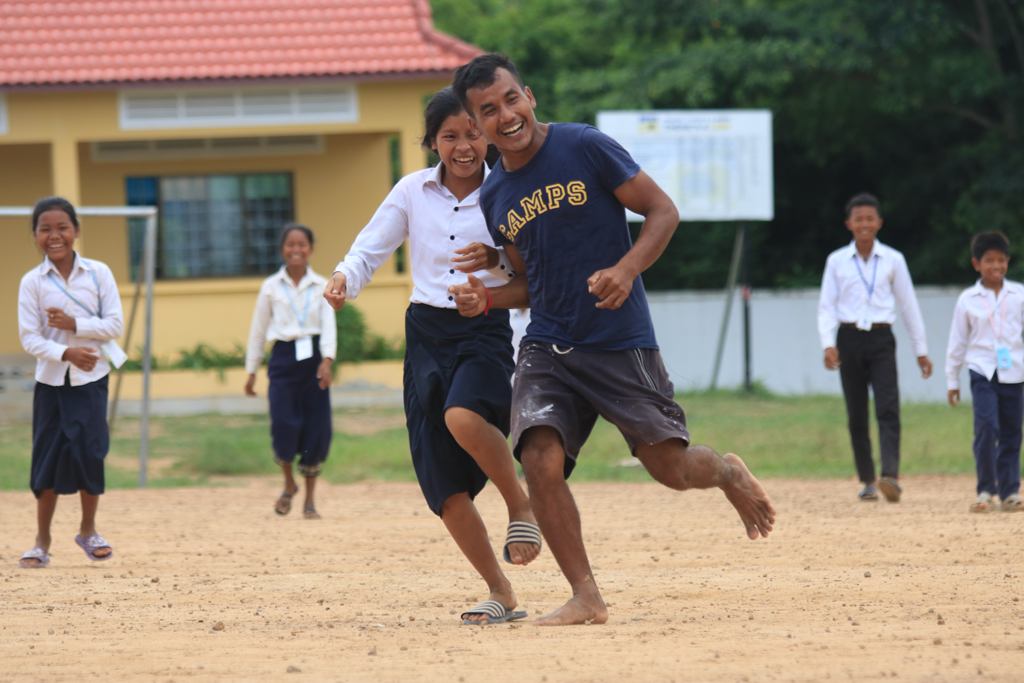
Each summer, students work together in teams or ‘composites,’ with group ages ranging from 12 to 17. This mixture allows older students to mentor the younger ones, particularly those returning students who show new joiners the ropes. Camps have expanded from Kenya and Tanzania to South America and Asia, and are well aware of the pitfalls of volunteer tourism. “Predominantly, those camps are all permanent infrastructure with local people employed, local people overseeing the projects in collaboration with locals to understand what they need, what will have the biggest impact,” Sharon explains.
Additionally, all expeditions are mapped to the UN Sustainable Development Goals, focusing on projects that serve education, microfinance, food security, gender equality, and access to clean water, just to name a few.
But how is this reframing climate awareness education, and what does this mean for students?

Camps International hosts real-world studies courses that are free for students and teachers, and can be done in preparation for an expedition. “We’re trying to challenge young people to change their behaviors at home day to day, minute to minute, to reduce their carbon footprint,” Sharon says. Students engage with tools such as the World Wildlife Fund carbon calculator and reflect on small lifestyle changes they can make, whether that’s choosing to purchase secondhand clothing or reducing their plastic usage.
However, Sharon believes that true climate education happens on the ground, when young people encounter the impacts of pollution, habitat loss, and the Earth’s changing landscape. “I’ve been to Kilimanjaro twice,” she says. “The two times I went were 10 years apart, and I was astounded at the reduction in the size of the glacier that’s at the top. In 10 years it diminished dramatically. And I’m not sure I would be as passionate about it if I hadn’t seen it for myself. Students get to witness and are kind of embedded in the landscape and the impact when they come back…they’re much more passionate about it.”
What you see and do has a much bigger impact on your learning than the things you read about and watch on TV.
Sharon PalmerPartnerships with local organizations mean that as students work with communities, they’re encountering complexities that can be difficult to teach in a classroom. Borneo, for example, allows students to speak with local organizations dealing with the impacts of palm oil production, a destructive process that is decimating wildlife habitats; however, it also brings funds to locals. Camps International doesn’t shy away from the hard questions: “Why would you cut down these beautiful forests and these amazing creatures that you’re putting at risk versus cultures and communities getting an income from producing palm oil. That human-wildlife conflict is a thread for us throughout,” Sharon says.
Sharon was a classroom teacher for many years before moving to Camps International, and she knows how tricky these topics are, which is why she’s a staunch proponent of ‘on the ground’ learning. “What you see and do has a much bigger impact on your learning than the things you read about and watch on TV,” she says.
Life is full of challenges, but experiential learning that pushes students to engage with difficult subjects and step outside their comfort zone builds critical thinking skills and confidence, while also providing context for social and environmental issues. And Camps International is transparent; operating as an ethical social enterprise that takes a lot of long-haul flights isn’t always easy – they haven’t got it perfect either. “We’re always learning and looking for ways to extend our responsible travel kind of program and add to it and learn from it and evaluate it. It’s an ongoing conversation,” she admits.
“We’re keen to improve and learn while really adding value to those students and helping them make long-term life changes.”
In the end, Sharon hopes that students walk away from their experiences understanding a larger truth about travel and engaging with the world: How do we make sure the impact we leave on a place is always a positive one?
