


A conversation with scientist and author Dr David Beerling provides a unique solution to sequester carbon for the next 10,000 years.
Yes, volcanic rocks and carbon capture. It sounds like sci-fi (or a tech bro’s start-up pitch), but this rock ‘n’ roll solution might actually be the way forward.
The slopes and plains of Mount Vesuvius hold a fertile secret – one that has helped feed vineyards and orchards for millennia. It is the nutrient-rich reservoir of ash and volcanic rocks, which, when broken down or ‘weathered’, release a slew of minerals that help form rich soils and boost plant growth.
They also capture carbon.
We spoke with Dr David Beerling, modern-day Indiana Jones for natural sciences (you may have read his book The Emerald Planet: How plants changed Earth’s history, or watched the BBC Two TV series it inspired, How to Grow a Planet). As a paleobotanist, he’s been part of crucial research about the ways that our environment has evolved alongside the shifting carbon dioxide levels.
It turns out that accelerating rock weathering could turn global farmland into carbon capture powerhouses.
According to the United Nations Environment Programme (UNEP), even with current climate policies, our planet is speeding towards a 2.8 °C rise in global average temperatures. We know the effects would be catastrophic.
And while reducing carbon emissions is key, carbon removal technologies are another crucial element to mitigate climate change.

A New Paleo-Perspective
Dr David Beerling is something of a rock star in the science world. In 2008, he was part of the foundational research at NASA that established the global safe limit for carbon dioxide of 350 parts per million (ppm).
Essentially, determining how much carbon dioxide there could be in our atmosphere before we all keel over.
And paleobotany, the study of fossilized plants, actually offers a unique insight into climate science. Answering the question, ‘how did ancient plant life respond to changing carbon dioxide levels, ’ helps modern scientists build predictive models for our own shifting environment.
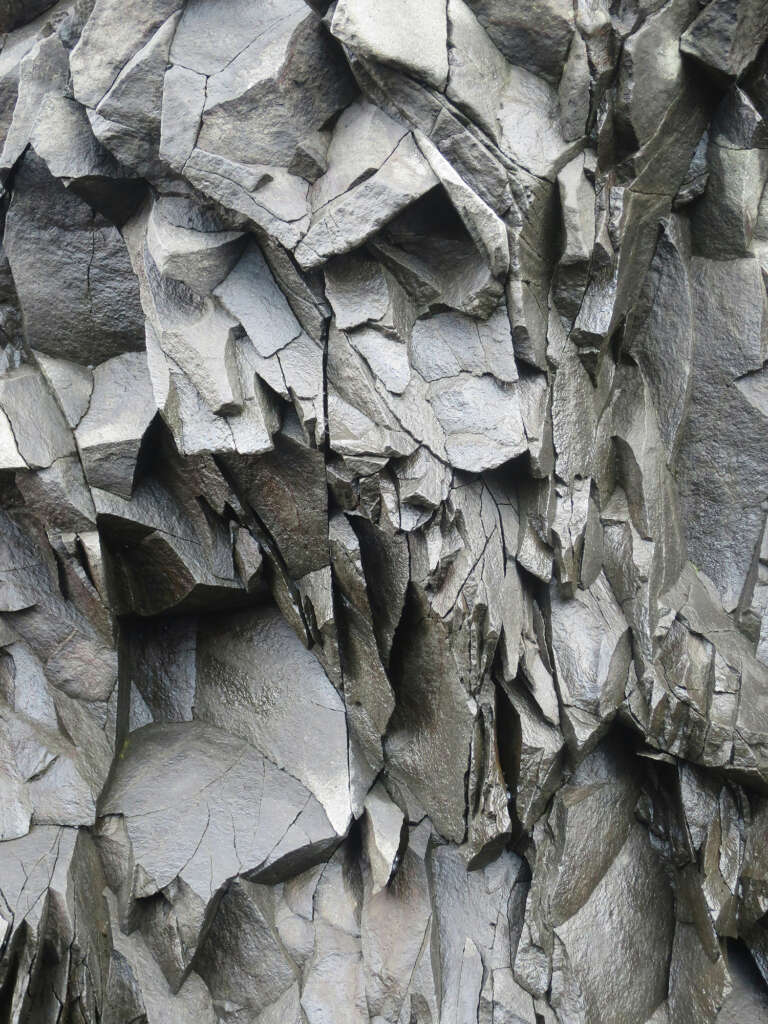
Basalt is the most abundant volcanic rock type on Earth, making up more than 90% of volcanic rock on our planet’s surface and comprising over 50% silica and high percentages of magnesium and iron.
“Enhanced Rock Weathering (ERW) is the application of crushed silicate rocks, typically basalt, to soils in agricultural systems,” explains Dr Beerling. (He’s also the founder and Director of the Leverhulme Centre for Climate Change Mitigation in the UK, which has been conducting comprehensive field trials and research into this technology).
There isn’t one solution to the problem, and I think enhanced weather could just fit one small part of the emissions reduction requirement.
Dr David BeerlingAs basalt rocks break down, they release calcium and magnesium ions into the soil. The compounds then capture soluble carbon, known as bicarbonate, and rainwater runoff transfers this form of carbon from the land to the oceans, where, according to Dr Beerling, “It’s stored for 10,000 years or so.”
For almost all of Earth’s history, the rocks beneath our feet have played an important role in the global carbon cycle. Mineral-rich rocks broke down or ‘weathered’ over millions of years, releasing minerals that react with dissolved carbon from the atmosphere, locking it in the ground and ultimately deep in ocean beds as bicarbonate sediments.
However, this natural process is too slow to drive decarbonisation in the coming decade.
The solution? Speed up the process with ‘Enhanced Rock Weathering,’ a process that’s honestly much cooler than it sounds.
According to a 2026 study, ERW could remove 350-760 million tonnes of carbon dioxide per year by 2050, and potentially more than 1 billion tonnes annually by the end of the century.

Basalt application to soybean fields. Credit: Ilsa Kantola Basalt application in Illinois. Credit Jordan Goebig
Crushing Rocks for a Better Future
So what exactly is Enhanced Rock Weathering?
Crushing rocks and sprinkling them over farmlands. Literally.
The process of weathering silicate rocks, such as basalt, is basically a nature-based solution, taking what Earth’s own systems already do (sequester carbon in rocks) and speeding up the process. “It’s a combination of crushing [the rocks], mixing it into the topsoil, and biology of the roots driving acceleration,” explains Dr Beerling.
Enhanced Rock Weathering not only captures carbon but also increases the release of key plant nutrients, improving soil fertility across the board.
“It’s a triple win – you get carbon capture, but you also get restored soil health and increased food security,” says Dr Beerling. “All these additional elements that are released by the basalt as it weathers basically restore the biologically available pools of these elements.”
Where did the idea come from? “So the idea kind of originates back to a funny sort of paper in Nature, a 500-word paper where adding cross-silicates could increase carbon capture,” he says. “A bit later on, people thought you could do it with forests and soils, but nobody really had any funding to try it.”
Ten years and a few grants later, the Leverhulme Centre for Climate Change Mitigation is helping discover carbon capture solutions.
A 2024 study led by Dr Beerling on farms in the USA’s Corn Belt over four years found increases in crop yields of maize and soybean, decreased soil acidification, and improved soil fertility. The increase in soil pH after enhanced rock weathering has also been shown to decrease the emissions of nitrous oxide, another greenhouse gas, from farmlands.
As the rocks weather, they also release silica, which could fortify plants enough to reduce the usage of pesticides. De Beerling explains how this would work in theory: “Plants will take up silica. That helps them build tougher cells and sensitize their immune system, so it protects them from pests and diseases.”
The benefits of ERW extend from land and air to the oceans as well. “If you did it at scale, because the runoff is alkaline, it can actually help counteract ocean acidification and support coral reef health. There’s another win there.” (And yes, just like most boundaries of our planet, the planetary boundary of ocean acidification has been breached, one more fun climate change effect to look forward to).
Globally, more than a dozen companies are now working in the space and even selling ERW-based carbon credits, with projects in India, Brazil, and the USA. As of early 2025, nearly 10,000 tonnes of carbon dioxide have reportedly been removed.
Not all Rock ‘n’ Roll Yet for Carbon Credits
Nevertheless, emerging research has shown that it is currently difficult to determine exactly how much carbon has been permanently removed. The rate is variable based on the type of soil, type of rock, application rate, and time periods.
According to Project Drawdown, big data approaches and machine learning models are required to predict the best-performing soil-rock combinations.
Dr Beerling offers a plan to ensure that ERW is best able to achieve its potential. “Now we’re going to think about monitoring, reporting, and verifying carbon removal. We need international standards that are rigorous and agreed upon for carbon credits on the voluntary carbon market,” he says.
And ERW isn’t perfect: it relies on mining and breaking down hard materials, activities that are energy-intensive and can contribute to emissions as well. There are also concerns about toxicity from accumulated trace metals such as nickel and chromium from olivine, one of the rocks used for weathering, or sodium, and research continues in the field.
Carbon capture alone will never be enough.
Diversifying our approach to actionable solutions to climate change is necessary for success, Dr Beerling argues. “You’ve got to have emissions reductions from fossil fuels. Got to have a transition to clean energy infrastructure, because we’re currently emitting 40- 45 billion tons a year of CO2 into the atmosphere.”
“For any one nation to get to net zero, you need a portfolio of CDR technologies,” says Dr Beerling. “You might need to move some with direct air capture, some with bioenergy, some with enhanced weathering. There isn’t one solution to the problem, and I think enhanced weather could just fit one small part of the emissions reduction requirement.”
But if crushing basalt can help, sounds like it’s a winner for us all.
