


If you’ve noticed Dubai erupting in brilliant crimson and orange, you’re not imagining things, says head of environmental progammes at Terra Expo City, Sheena Khan.
Growing up in Toronto, autumn was an event.
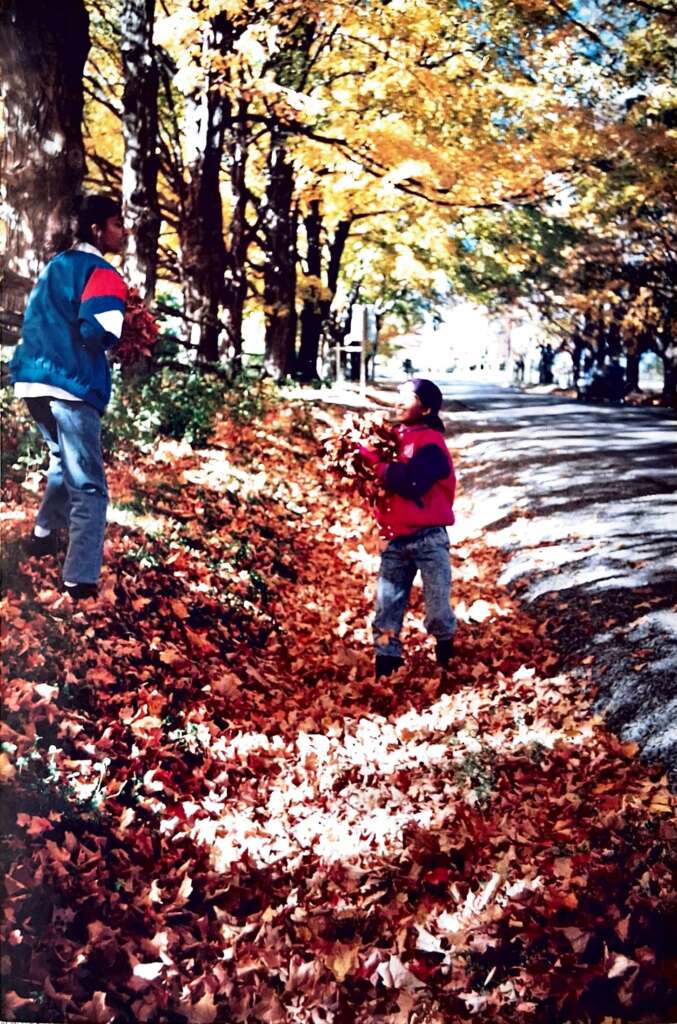
My family treated the fall colour season as something close to sacred — we’d pile into the car to find the most spectacular maples, crunch through drifts of gold and red on the way to school, and spend whole afternoons buried in leaf piles that my father would rake only for us to scatter again. The colours weren’t backdrop; they were the main act. We marked the year by them.
I didn’t have a word for it then, but what my family was practising was ethnobotany in its most intimate form — the quiet, lived relationship between people and plants that gets passed down not through textbooks but through ritual and memory. The specific rustle of a particular leaf. The smell of decay that somehow means something good is coming.
That inheritance travels. When I watch my own children notice the flame trees beginning to blush along Dubai’s streets, I recognise the same instinct: stop, look up, feel the season shift. The tree is different, the continent is different, but the human impulse — to let a flowering or a fading mark time, to feel that a place is yours because you know its botanical moods — is exactly the same.
That is ethnobotany in action. Not just in the laboratory or the field, but in the everyday act of a city learning to love its trees.
Flame Tree Season has officially launched in Dubai –a city-wide celebration of the iconic Delonix regia in full bloom. Its botanical name comes from the Greek delos (visible) and onyx (claw), referring to the clawed shape of its petals.
The study of how people and plants shape one another, known as ethnobotany, reveals how the roots of human history continue to shape the soul of a modern city. The flame tree, native to Madagascar, has been introduced and naturalized into the urban landscapes of Dubai. Over the decades, it has woven itself into our local rhythm. For many of us, these blossoms are a seasonal milestone: they mark the end of the school year, provide much-needed shade for a roadside majlis, and signal the official arrival of the Dubai summer.
Everyone has a favourite tree that defines their neighbourhood. Mine is the spectacular burst of orange from the flame tree at the roundabout at the end of Al Manara Street.
But this initiative is about more than aesthetics, it’s also about urban identity and wellbeing. By integrating nature into our cities, the goal is to create liveable, breathable communities where residents feel a deep, emotional connection to their environment.

Nature as a Component of Placemaking
Dubai isn’t alone in celebrating its botanical stars. Cities worldwide realize that ‘living landmarks’ are just as important as skyscrapers, and the seasonal celebrations bring communities together.
- Keukenhof in Lisse, the Netherlands: Each spring, millions of tulips transform the city and surrounding countryside into a vibrant celebration of colour, drawing visitors from around the world.
- Tokyo, Japan: The world-famous sakura (cherry blossom) season turns Tokyo, Kyoto, and many other cities across the country into a pink-hued festival of renewal.
- Pretoria, South Africa: The “Jacaranda City,” where the streets turn purple every October, creating a massive tourism draw.
- Washington DC, USA: The National Cherry Blossom Festival is a four-week, century-old tradition that celebrates international friendship and the arrival of spring.
Planting a Future
At Terra, Expo City Dubai, our Head of Education and Culture recently planted a young flame tree alongside the exhibit’s established, fully grown specimens — a gesture that speaks directly to the mission of Flame Tree Season itself.
Terra is home to some of the finest mature flame trees on the Expo City campus. Adding a new sapling to their ranks is a deliberate act of institutional commitment: a statement that the work of building a nature-connected city is ongoing, and that the investment we make in green infrastructure today is one that future generations will inherit.
Why It Matters
Initiatives like Flame Tree Season remind us that we’re part of an ecosystem. They encourage us to look up from our screens, pause our commutes, and appreciate the resilience of nature in our desert home. It’s about building a city that has a pulse – where the seasons are marked by petals rather than just temperatures.
This morning, I noticed that while all our flame trees at Expo City Dubai are at canopy height, they’re still teasing us: they haven’t all hit peak bloom just yet.
