

Healthy topsoil is keeping our world fed. Yet, Earth’s most crucial substrate is in dire need of help; enter Goumbook’s MENA Regenerative Agriculture Venture Programme, an initiative empowering research and solutions. We spoke with Lara Hussein and Omaima Marhane about their experience participating in past years to learn more about why we should all be a bit more passionate about dirt.
Lara Hussein and Omaima Marhane are really passionate about soil. Yes, soil.
While regenerative agriculture might not be the first thing you think about in the morning, Lara and Omaima are using their knowledge and enthusiasm for the subject to create new solutions for the region’s agricultural issues.
Today, Lara is the co-founder of The Waste Lab, turning waste into healthy compost. Omaima has found a way to increase drought resistance in crops with bacteria. And while both of these women are blazing a trail through desert landscapes, they also got their start from an empowering new initiative: Goumbook’s MENA Regenerative Agriculture Venture Programme.
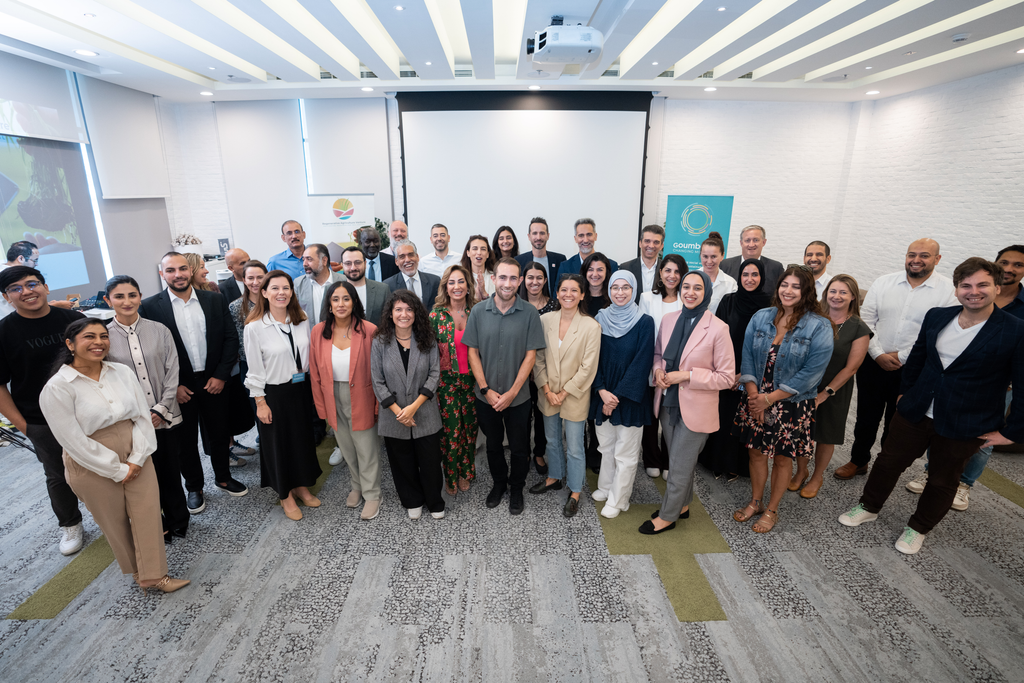
2024: Lara Hussein, The Waste Lab
Lara Hussein was concerned about the soil.
Growing up in Lebanon, Lara loved the natural beauty her home country contained; then came the wildfires. Desertification and soil erosion can lead to a sandier, less nutrient-rich environment, creating a horrible cycle of wildfire, followed by even further damage to the ecosystem.
Years later, in Dubai, Lara and her co-founder, Ceylan Uren, launched The Waste Lab, a grassroots attempt to prevent food waste in her community. Founded in 2021, this woman-led impact startup operates on a fairly simple premise: use food waste to create compost. “Instead of throwing everything away and losing everything- all the resources- and causing all the environmental and health problems to ourselves,” she says, Lara decided to ask a different question instead: “Why don’t we create something of value?”
However, in a desert country, composting was a revolutionary idea; traditional regional farming utilized ancient systems of water irrigation, such as falaj, not compost.
Instead of throwing everything away and losing everything- all the resources- and causing all the environmental and health problems to ourselves, why don’t we create something of value?
Lara HusseinThe Waste Lab is a comprehensive, country-wide program rescuing food waste from restaurants, hotels, and grocery stores. They collect scraps, sort them at their facility in Jebel Ali, analyze the data, and then ship it off to an Al Ain farm to become compost. While the process is simple, the logistics are not, and in the five years since their launch, The Waste Lab has grown to an operation of over 60 employees.
In 2024, as a young start-up, Lara and Ceylan decided they would apply to the first-ever MENA Regenerative Agriculture Venture Programme. “I’d been wanting to dig deeper into regenerative agriculture because I’d read about it, and it’s super new in our region,” she explains. What resonated with her most about the program? The fact that the program was designed to support solutions created specifically for the region’s unique agricultural problems.

“Most of the materials we find out there are not for the UAE and the GCC,” Lara says. “This localization of knowledge through the partners and topics they covered was important and helped us a lot to shape how we want to move forward, especially when it comes to the soil application and the farming aspect.”
The MENA Regenerative Agriculture Venture Programme helped the start-up to expand and find funding, a tricky feat in a place where nature-based solutions still felt inferior to shiny technological innovations at the time. Now, she says, nature-based solutions have begun to find their place; still, impact start-ups aren’t an easy sell to investors in the beginning.
To date, the company has rescued 10 million kilograms of food waste, produced 1.5 million kilograms of compost, and diverted 11.5 million XX of Co2 (a conservative estimate since, as Lara says, they like to “stay humble”). When they started, they processed 50 kilograms of waste per day; now, that number has grown to 30 tons.
“The most exciting part for me is working with soil and going to farms, understanding how to start collaborating with farmers, their soil needs, their crop needs. Because we can heal the soil, build soil, and start growing more food in the UAE.”
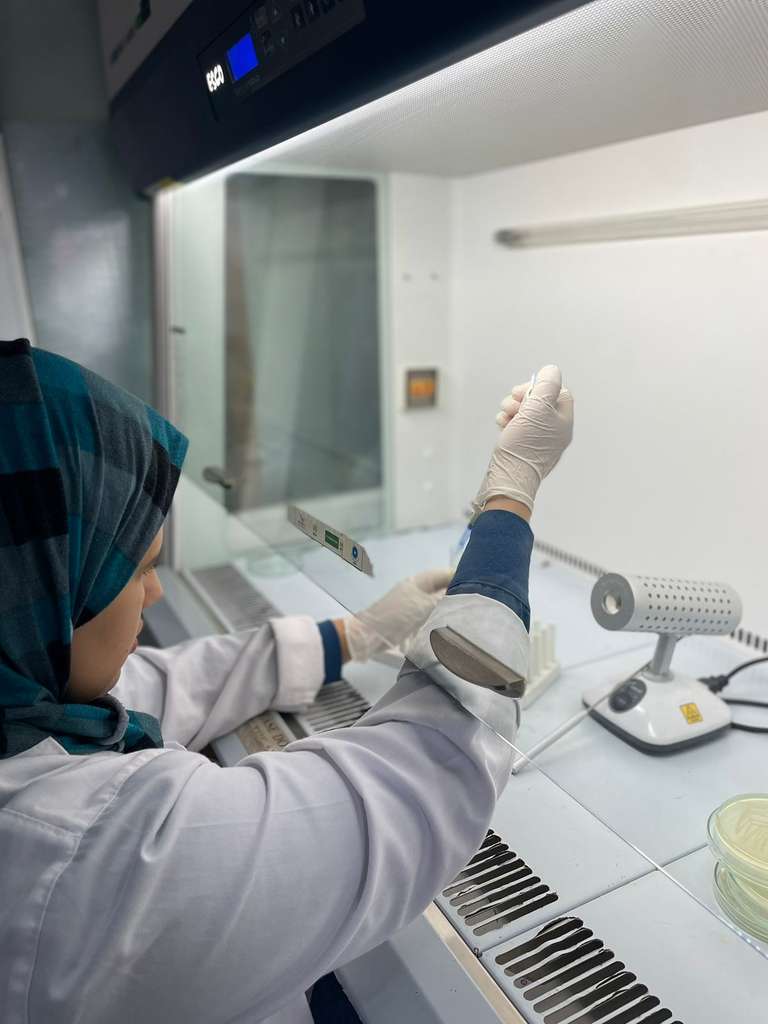
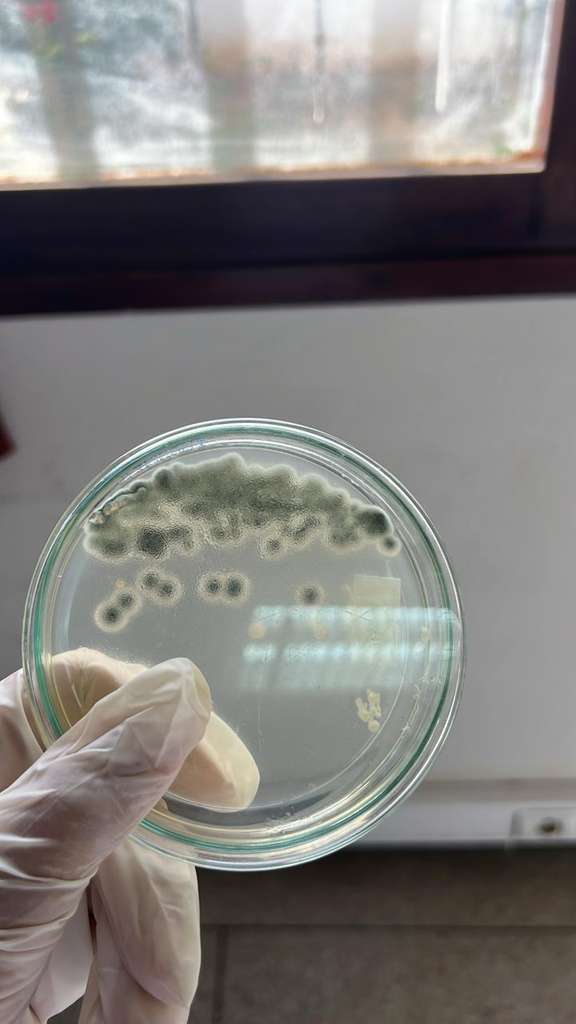
2025: Omaima Marhane, Actinobacteria
Omaima loves soil. Like many of her MENA Regenerative Agriculture Venture Programme cohort graduates, Omaima is passionate about the science behind her work.
A doctoral candidate based at Ibn Zohr University in Agadir, Morocco, Omaima is a microbiologist studying a simple but effective solution to drought: actinobacteria. Pronounced like it’s spelled, the naturally occurring bacteria can help crops in drought-affected regions survive on 75% less water.
Omaima’s work sounds technical, but stay with us here. Actinobacteria improve plant tolerance to drought. These naturally beneficial bacteria have filaments that wrap around the roots, helping them absorb water and nutrients more efficiently. This microorganism naturally lives in arid soil; Omaima isolated it from locally occurring bacteria. Actinobacteria stimulate root development and improve their ability to cope with drought stress. Omaima introduces the actinobacterial spores to seeds with a natural liquid binder, which coats the seed before planting.
However, Omaima had a problem: how to take her incredibly effective (and inexpensive) solution and scale it across a region? That’s when she heard about Goumbook’s MENA Regenerative Agriculture Venture Programme. She applied and was accepted to the 2025 cohort.
The program completely changed the way I viewed my research. Until then, I was thinking only as a scientist. It made me realize that my PhD project could become something with real impact beyond the laboratory.
Omaima Marhane“The program completely changed the way I viewed my research,” she says. “Until then, I was thinking only as a scientist. It made me realize that my PhD project could become something with real impact beyond the laboratory. For the first time, I started thinking about entrepreneurship, innovation, and how scientific research could eventually become a solution for farmers.”
“And also, I discovered something new about myself. I started imagining myself as a businesswoman.”
Today, one year on from the program, Omaima has taken her newfound confidence and is continuing to validate her solution through additional trials, working towards bigger collaborations with industrial and agricultural partners. Eventually, she wants to develop a bio- based product that can be used by farmers facing drought conditions.
“Water scarcity,” she explains, “is one of the biggest challenges facing agriculture in Morocco.”
And What About 2026?
After two successful years, in partnership with HSBC, and supported by the United Nations Climate High-Level Champions, Goumbook has just announced its third cohort of the MENA Regenerative Agriculture Venture Programme. Open to scientists, researchers, and students working to find agricultural solutions, the 2026 cohort is, for the first time, now open to applications from around the world – food security affects us all.
Selected applicants will receive one-on-one mentorship, courses and workshops, and networking opportunities. At the end of the program, participants will pitch to an expert jury, where the top three ventures will each receive a grant of US$20,000.
If you’re working on a nature-based solution addressing food security, soil health, water scarcity, salinity, biodiversity loss, and desertification (just to name a few), then this could be the program for you.
Applications are now open worldwide. Register and apply for the 2026/2027 Cohort of the MENA Regenerative Agriculture Venture Programme here.
