


Growing up near the wadis of Oman, Ahmed Al Hadabi once wondered at the vibrant insect world around him. Today, as insect populations decline to devastating levels, Ahmed and his colleagues at Nature Lab are working to change attitudes and raise awareness of these crucial creatures.
This is part two of our ongoing series with Nature Lab. In the coming months, read dispatches from the field as Nature Lab team members share conservation opinion pieces on Oman’s incredible ecosystems.
As a kid 15 years ago, I would trek down to Wadi Fanja in the Ad Dakhiliyah Governorate of Oman and spend a whole afternoon flipping rocks, peering into puddles, and watching dragonflies swarm above the vegetation. I was enchanted by the sheer diversity of shapes, colors, sizes, and sounds of the local insects; everything from bright green beetles to bejeweled butterflies and moths.
These trips sparked a lifelong interest and appreciation for the arthropod world. But now, as an adult, when I go down into that same wadi, I’m met with silence. I flip a rock and find nothing underneath. I sit in the same spot I did as a kid, and I see maybe two or three dragonflies instead of tens.
Where did all the bugs go?
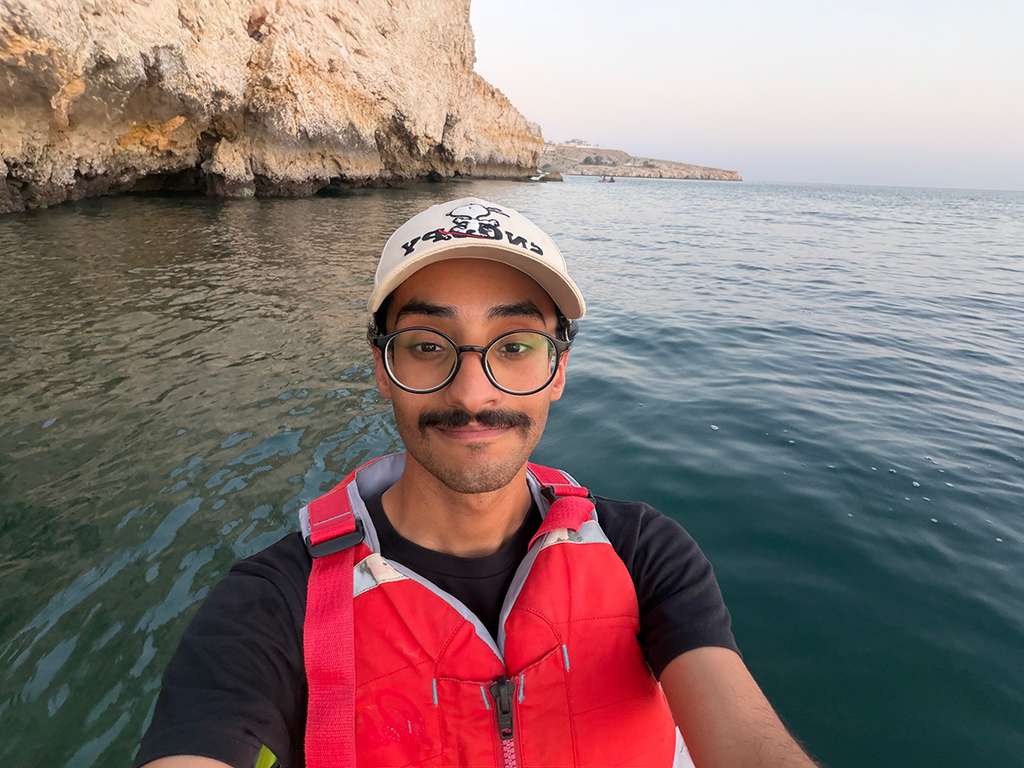
I asked this question to experts in the field, from entomologists to higher-ups at the Oman Environmental Authority, but they all give me the same answer: we don’t know. The decline of insect populations is obvious, but few give it a second thought; no one considered it worth researching, and no one really cared. All the research about insects in Oman focuses on agricultural pests and how to dispose of them, but they represent only a handful of species from the tens of millions of insects estimated to exist on this earth.
During my work at Nature Lab, I’ve had the opportunity to speak to the general public about insects, revealing the sentiment most people have towards them: Agricultural pests, carriers of disease, disgusting sewage monsters, and angry, stinging war machines. A few harmful examples in our way of life have led us to write off the entire arthropod phylum, which contains the largest proportion of diversity on Earth and accounts for over 80% of all living animal species. Now, in this age of change and rapid loss of biodiversity, conservation science focuses on the other 20% because of the negative label we have assigned to all arthropods; but in reality, without arthropods, the remaining 20% of animals would not be able to exist.
A few harmful examples in our way of life have led us to write off the entire arthropod phylum, which contains the largest proportion of diversity on Earth and accounts for over 80% of all living animal species.
Ahmed Al HadabiWe rely on insects for so many services we take for granted. All agriculture would collapse if not for bees, butterflies, and flies pollinating our crops. Animal waste would accumulate and sour the soil if not for dung beetles and termites. Soil would be barren and useless for plant growth if it wasn’t for ants and termites recycling nutrients and aerating it. Not to mention the hundreds of thousands of mammals and birds that rely on insects as their main food source. Losing insects would surely mean losing those mammals too.
Insect populations are rapidly declining globally; the few research papers that get published on the topic show terrifying results, like the 2017 study by Caspar Hallmann, which found a 75% decline in total flying insects in Germany over twenty-seven years.
However, here in Oman, we have no such studies; in fact, we don’t even have a baseline figure to compare insect populations to. We know they are dying; we know how essential they are to every living thing on this earth, but no one is doing anything about it.

Yet, it’s not too late. Appreciation for the small creatures of this world is growing as more people realize their importance and uniqueness. In the future, this can perhaps materialize in funds dedicated to their research and conservation, or the expansion of existing entomology courses at universities. Citizen science is also accessible to anyone with a smartphone; the simple act of taking a picture of a cool insect you see and uploading it to a worldwide database, like iNaturalist, does more than you can imagine.
I envision a future where conservation science appreciates the small and treats all animals as irreplaceable parts of the same system.
