


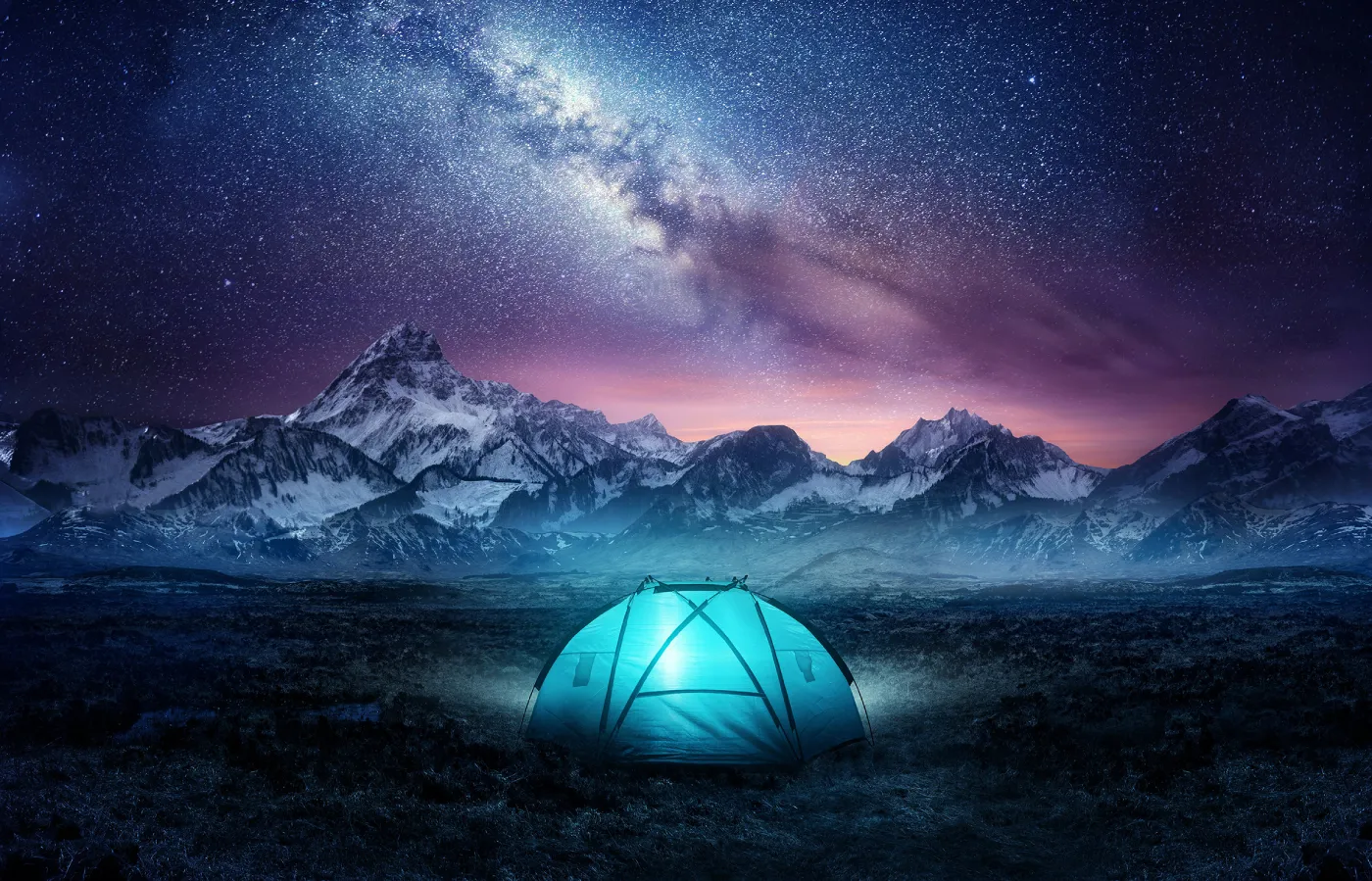
Earth’s most unifying vista could be changing forever. Reflect Orbital and SpaceX intend to launch enough satellites that could fundamentally alter humanity’s access to the stars while increasing light pollution. CEO of Dark Sky International, Ruskin Hartley, describes the costs of losing the night.
Six trails in the frame.
The shutter had been open for a mere 15 seconds, and in that short span of time, six satellites and planes traced a line of red lights across the Milky Way.
As an astrophotographer, I’d become increasingly aware of the presence of satellites in our night skies, but this was by far the busiest picture I’d ever taken. In fact, it marked a stark difference between the number of satellites I’d seen in my photos just three years earlier, taken in the same location.
Our skies, like the rest of our world, have become monetized.
“Just because you’re putting something into low Earth orbit does not mean it does not have an impact,” Ruskin Hartley says, exposing the increase in light pollution due to satellites. As the CEO of Dark Sky International, a US-based nonprofit dedicated to preserving our nighttime environment, Ruskin explained the potential effects of light pollution on our bodies and the planet’s wildlife.
Our LED lights, our need for light-speed connectivity, and even our car headlights are fundamentally altering our ecosystem.
Two companies, SpaceX and Reflect Orbital, have plans to exponentially increase the number of satellites, potentially changing Earth’s most compelling vista forever.
Satellites on the Move
Today, more than 15,000 satellites move across the sky.
Far from Sputnik’s spiky, sci-fi appearance, modern satellites have a bank of solar panels extending from both sides, with a central body housing the necessary computers. Sunlight reflects off their solar panel banks, making them visible from Earth as they fly overhead.
Space Exploration Technologies, or SpaceX, intends to launch 1 million satellites into space, pending approval from the Federal Communications Commission (FCC). While the drive for faster internet and even greater accessibility for those in rural or remote areas is a worthy goal, it comes at a cost.
Beyond the impacts of light pollution, launching 1 million of anything into space leaves a massive carbon footprint. And a satellite doesn’t live happily in orbit forever, either. “They have a lifespan of maybe five years, and then they burn up in the atmosphere, devolving aluminum and other heavy metals into the upper atmosphere,” Ruskin says. “It degrades ozone in the launch phase, while contributing soot into the upper atmosphere. That’s forcing climate change.”
1 million launches times 5 years is a lot of satellites, a lot of carbon emissions, and a shocking impact on Earth’s own atmosphere. And SpaceX’s plan isn’t the only company aiming to increase the number of satellites around Earth.
Enter Reflect Orbital.
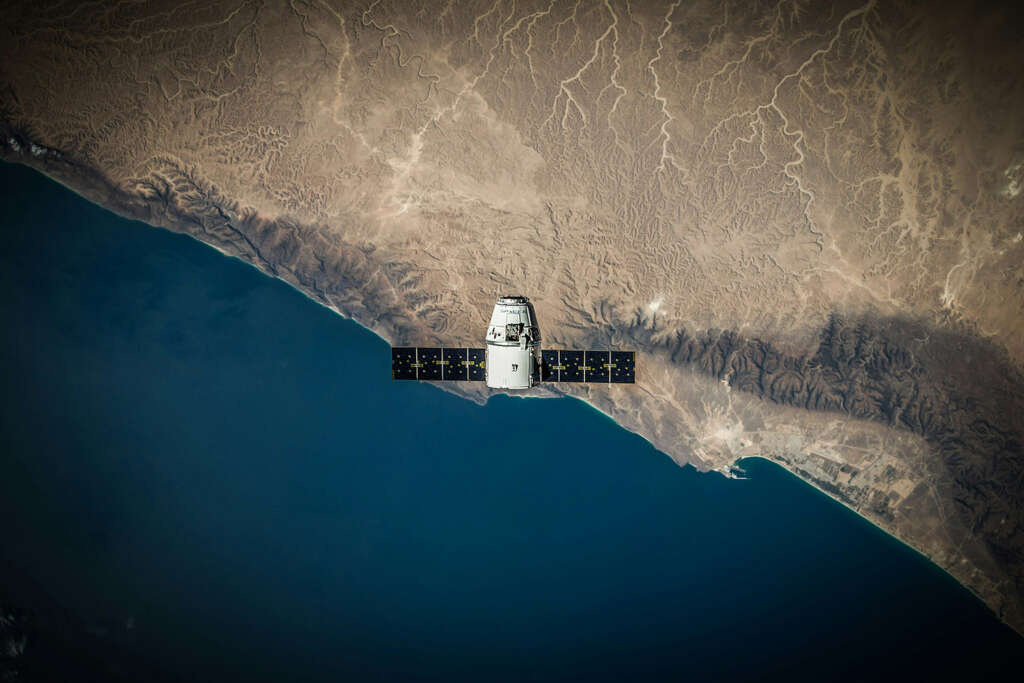
The answer to a question we never thought we’d be asking: What happens when you take a massive mirror and launch it into space?
Founded in 2021 by Ben Nowack and Tristan Semmelhack, Reflect Orbital is a young start-up from California. Their revolutionary idea? Utilize satellites with mirrors to illuminate parts of the Earth at night. Let’s say a construction company needs to work 24 hours a day to reach their deadlines; rather than using floodlights, they could instead task a satellite to reflect the sun’s light onto the work site.
Reflect Orbital’s satellites will house a massive mylar sheet of lightweight reflective material, an origami-inspired folding sheet capable of expanding to 18 x 18 meters (59 feet). As of now, mid-2026 is their first potential launch date, with more satellites filling the skies by 2027. Just like SpaceX, they’re waiting on FCC approval, and the time for petitions and public commentary is swiftly coming to an end.
Reflect Orbital claims that using sunlight rather than traditional lighting systems is actually more environmentally friendly. However, argues Ruskin, that’s not necessarily the case. “Reflect Orbital is saying, ‘We can help decarbonize the planet by increasing the efficiency of solar farms and by eliminating the need for street lights. And we can do that by illuminating the Earth from space or by extending daylight in a solar farm,” Ruskin explains. “And yes, arguably that is the case, but I think it misses the carbon impact of these projects in the broader environmental impact.”
Not to mention the light pollution.

A World that Never Sleeps
So why does it matter that two companies intend to flood our skies and our planet with light?
“We know that all living things basically need bright days, dim evenings, and dark nights,” Ruskin explains.
And the scientific community is barely beginning to understand the lengths to which the health of the creatures on this planet (humans included) is intertwined with the darkness. Light pollution not only changes our circadian rhythms and sleep cycles, but it also deeply impacts nocturnal animals and insects, ecosystems, and even the navigation systems migrating species use.
“Every study that has been done has indicated that if you illuminate plants, animals, insects, wildlife, and even fish at night when they’re expecting it to be dark, it disrupts their behavior, disrupts their ability to forage. It changes predator-prey dynamics. It disrupts their ability to mate and reproduce.”
Every study that has been done has indicated that if you illuminate plants, animals, insects, wildlife, and even fish at night when they’re expecting it to be dark, it disrupts their behavior, disrupts their ability to forage. It changes predator-prey dynamics. It disrupts their ability to mate and reproduce.
Ruskin HartleyIn the past fifty years alone, researchers have found a 70% decrease in wildlife populations globally. Urbanization, insecticide use, agriculture, deforestation, and invasive species have all contributed to this decline, and light pollution is one more stressor on an already vulnerable wildlife population.
Harbor seals and migrating birds take navigational cues from the stars, hatching turtles may become disoriented by artificial light sources, and many of our most prolific pollinators, such as moths and bats, rely on dark skies to spread pollen and seeds.
Essentially, if you enjoy eating fresh fruits and vegetables, protecting our night skies is crucial for our continued access to those foods.
In mid 2026, Reflect Orbital will launch its first ‘demonstration’ satellite, known as Eärendil-1(the irony of yet another tech company co-opting the work of JRR Tolkien, a writer who famously wrote a subplot where sentient trees destroy an industrial site). This demonstration will illuminate an area 5 kilometers wide, at an intensity of “between 0.8 and 2.3 lux, several times brighter than a full moon,” according to research from Dark Sky International.
“We believe light pollution is one of the drivers of insect decline and biodiversity. And it’s happening at the same time that the world is being stressed with climate change and all these other issues.” Ruskin places one hand on top of the other. “They’re lying on top of each other, creating a very challenging environment.”
If you’ve ever purchased a blue-light protector for a screen or turned on night shift mode on your phone, then you’re probably aware of the well-studied effects of artificial light on human sleep patterns. The great thing is, the average person can shut off the lights or put down their phone. That moth fluttering around the porch light? It doesn’t have a say when the light goes out.
Dimming the Lights
The good news is that reducing light pollution needs only a few quick fixes; in many neighborhoods, it’s as simple as keeping outdoor lights below 3000k and using a timer or motion sensor. “We don’t need new technology to solve this one. We just need to change our relationship with light and dark,” Ruskin says.
There’s a unifying image all humans see when they look up – our night sky. On clear nights, we might see a scattering of stars from our backyards, or maybe the familiar glow of the moon when it’s full. Those who are lucky enough to live away from the glare of city lights might even be able to see the fuzzy etchings of the Milky Way galaxy as it rises in the summer months.
But that view might be about to change.
While SpaceX and Reflect Orbital claim that they’re offsetting the environmental costs of data centers by sending them to space and using free energy from solar panels, Ruskin argues that transparency and carbon reporting are the way forward. “We should have a carbon accounting of that,” Ruskin says. “And we should consider the broader environmental impact of these decisions before we assume, on the face of it, that just because it’s happening in space, it has no impact here on Earth.”
“Just because it’s carbon-free doesn’t mean it’s impact-free.”
